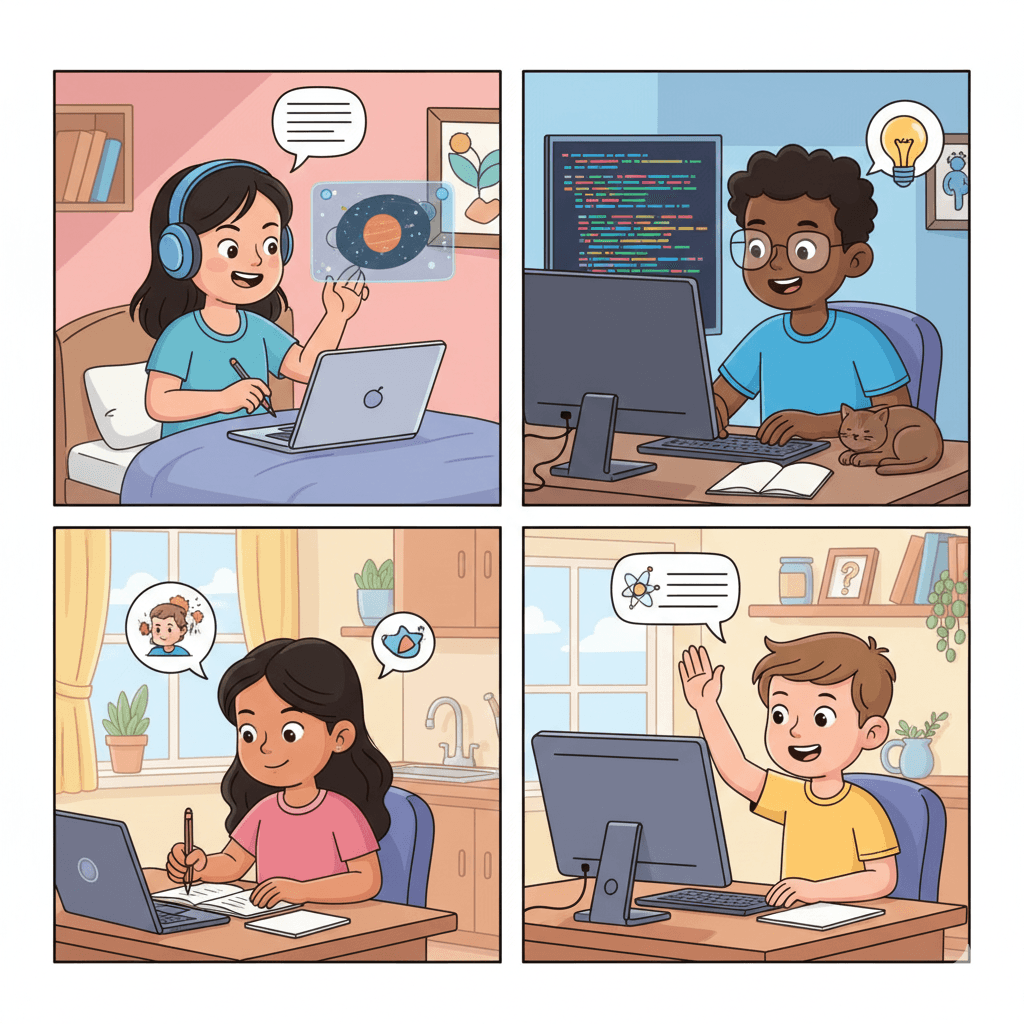
Remote learning presents unique challenges, but with the right strategies, you can create engaging virtual experiences that rival in-person instruction.
The Engagement Challenge
Without physical presence, it’s harder to read the room and maintain attention. But remote learning also offers unique opportunities for differentiation and flexibility.
Proven Strategies
Breakout Rooms
Small group discussions increase participation and reduce the intimidation of speaking to a large virtual audience.
Interactive Tools
Use polls, whiteboards, and collaborative documents to keep students actively engaged.
Camera Optional, Voice On
Create a culture where audio participation is expected, but cameras are a choice—reducing fatigue while maintaining connection.
Structured Check-ins
Begin and end each session with brief personal connections that build community.
Maintaining Motivation
- Set clear, achievable goals for each session
- Celebrate progress publicly
- Provide multiple ways to demonstrate learning
- Create asynchronous options for students in different time zones or circumstances
Remote learning works best when we embrace its unique affordances rather than trying to replicate in-person experiences exactly.